Post-production require skilled professionals and powerful software tools
Post-production refers to the final stage of filmmaking or video production, where all the recorded raw footage is edited, manipulated, and processed to produce a final product. It involves a series of processes, including video and audio editing, color grading, sound design, and visual effects, among others, aimed at enhancing the overall quality and appeal of the final product. In this article, we will delve deeper into the various aspects of post-production and their significance in filmmaking.
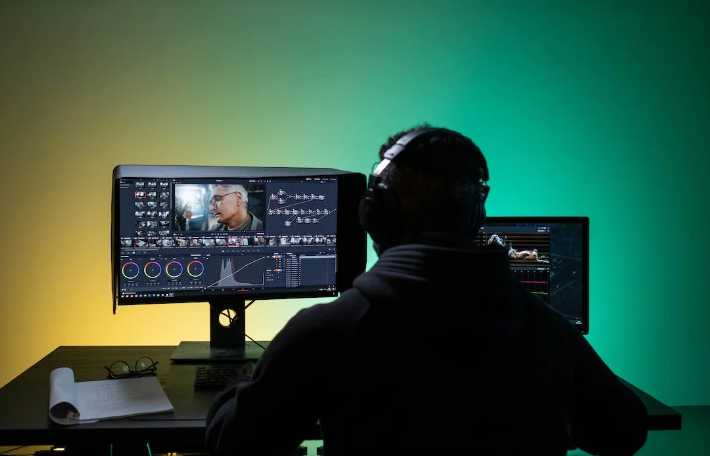
Video Editing
Video editing is the primary process in post-production, where the raw footage is trimmed, rearranged, and assembled to form a coherent storyline. The editor selects the best shots, eliminates the unusable footage, and adds transitions and effects to create a visually appealing product. Video editing software like Adobe Premiere, Final Cut Pro, and Avid Media Composer, among others, offer powerful tools for manipulating and refining the footage.
The editor’s primary goal is to create a cohesive narrative that flows seamlessly, capturing the audience’s attention and keeping them engaged. He or she must also ensure that the video’s pacing, sound, and visual effects match the desired tone and mood of the film.
Color Grading
Color grading involves adjusting the color and contrast of the footage to create a more cinematic look. It is an essential process in post-production, as it can completely transform the look and feel of the video. Color grading is used to adjust the brightness, saturation, and hue of the footage to achieve the desired color palette.
It can also be used to enhance the mood and atmosphere of the film, such as making it appear more warm and inviting or cool and eerie. Color grading software like DaVinci Resolve and Adobe SpeedGrade, among others, offer a vast range of tools for adjusting the footage’s color and contrast.
Sound Design
Sound design involves manipulating the audio of the footage to create a more immersive and engaging experience for the viewer. It involves adding sound effects, Foley sounds, music, and dialogue, among other elements, to enhance the audio quality and clarity.
The sound designer must also ensure that the audio elements blend seamlessly with the visuals, creating a cohesive audiovisual experience. Audio editing software like Pro Tools and Adobe Audition, among others, offer powerful tools for manipulating and refining the audio of the footage.
Visual Effects
Visual effects are used to create stunning and realistic effects that would be difficult or impossible to achieve during filming. They involve adding computer-generated imagery (CGI) to the footage to create a more immersive and realistic experience.
Visual effects can be used to create explosions, fire, smoke, and other effects, or even add entire environments to the footage. Visual effects software like Autodesk Maya, Adobe After Effects, and Nuke, among others, offer powerful tools for creating and manipulating CGI.
Delivery and Distribution
Once the post-production process is complete, the final product must be delivered and distributed to its intended audience. It involves encoding the video in various formats, such as MP4, MOV, and AVI, among others, to ensure it can be viewed on different platforms and devices.
The final product can be delivered on DVD or Blu-ray disc, streamed online, or broadcast on television. It must also be properly labeled and distributed to the intended audience to ensure maximum reach and impact.
Post-production is a crucial stage in the filmmaking process, where the raw footage is transformed into a polished and engaging final product. It involves a series of processes, including video and audio editing, color grading, sound design, and visual effects, among others, aimed at enhancing the overall quality and appeal of the final product. Post-production requires skilled professionals and powerful software tools to ensure that the final product meets the desired standards and exceeds the audience’s expectations.