Virtual and Augmented Reality are two emerging technologies that are transforming the way we interact with the digital world. These technologies have been around for a few years, but they have gained significant traction in recent times due to advancements in hardware, software, and increased demand from consumers.
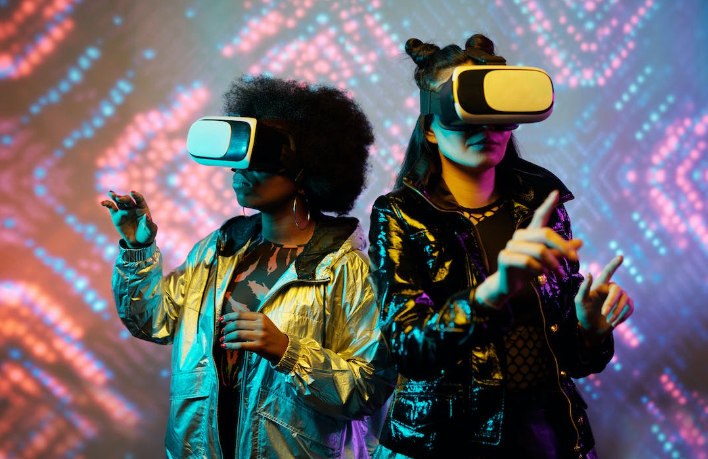
Virtual Reality (VR) is a technology that creates a fully immersive, computer-generated environment that simulates the physical presence of the user in a virtual world. Augmented Reality (AR), on the other hand, overlays digital information onto the real world, enhancing the user’s perception of reality.
Virtual Reality has a wide range of applications, from gaming and entertainment to training and education. VR headsets such as the Oculus Rift, HTC Vive, and PlayStation VR have made it possible for gamers to experience fully immersive gaming environments. Players can interact with virtual worlds and characters as if they were real, providing a unique and engaging gaming experience.
Beyond gaming, VR has also been used in education and training. Medical students can use VR to simulate surgeries, providing a safe and low-risk environment for them to practice and learn. Similarly, VR can be used to train pilots, firefighters, and other professionals in high-risk professions. By simulating real-world scenarios, users can gain valuable experience and skills in a controlled environment, reducing the risk of injury and loss of life.
Augmented Reality has also gained traction in recent years, particularly with the introduction of smartphones and wearable technology such as Google Glass and Microsoft HoloLens. AR enhances the user’s perception of reality by overlaying digital information onto the real world. This technology has a wide range of applications, from gaming and entertainment to retail and marketing.
AR has been used in gaming to create immersive experiences that blur the line between the digital and physical world. For example, the popular mobile game Pokemon Go uses AR technology to overlay Pokemon characters onto the real world, allowing players to catch them as if they were real. Similarly, AR can be used in education and training to provide interactive and engaging experiences for learners.
Retail and marketing have also seen significant adoption of AR technology. Retailers can use AR to provide customers with interactive product displays, allowing them to see how products would look in their homes before making a purchase. Similarly, marketers can use AR to create immersive experiences that allow customers to interact with their brand in new and innovative ways.
Despite their many benefits, VR and AR technologies are not without their challenges. The hardware required to run VR and AR applications can be expensive, and the technology is still relatively new, so software development is still in its early stages. Additionally, there are concerns about the potential negative effects of prolonged use of VR and AR technology on the eyes and brain.
Virtual and Augmented Reality are two emerging technologies that are transforming the way we interact with the digital world. While these technologies have their challenges, their potential benefits are immense. From gaming and entertainment to education and training, VR and AR have a wide range of applications that can provide users with unique and engaging experiences. As the technology continues to develop, we can expect to see even more exciting applications and use cases emerge